Asia is home to some of the world’s fastest-growing economies and several of its wealthiest. While countries like China, India, and Japan dominate in total GDP, GDP per capita provides a different perspective by measuring economic output on a per-person basis.
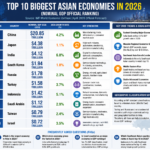
Based on the International Monetary Fund (IMF) 2026 nominal GDP per capita estimates, here are the richest economies in Asia.
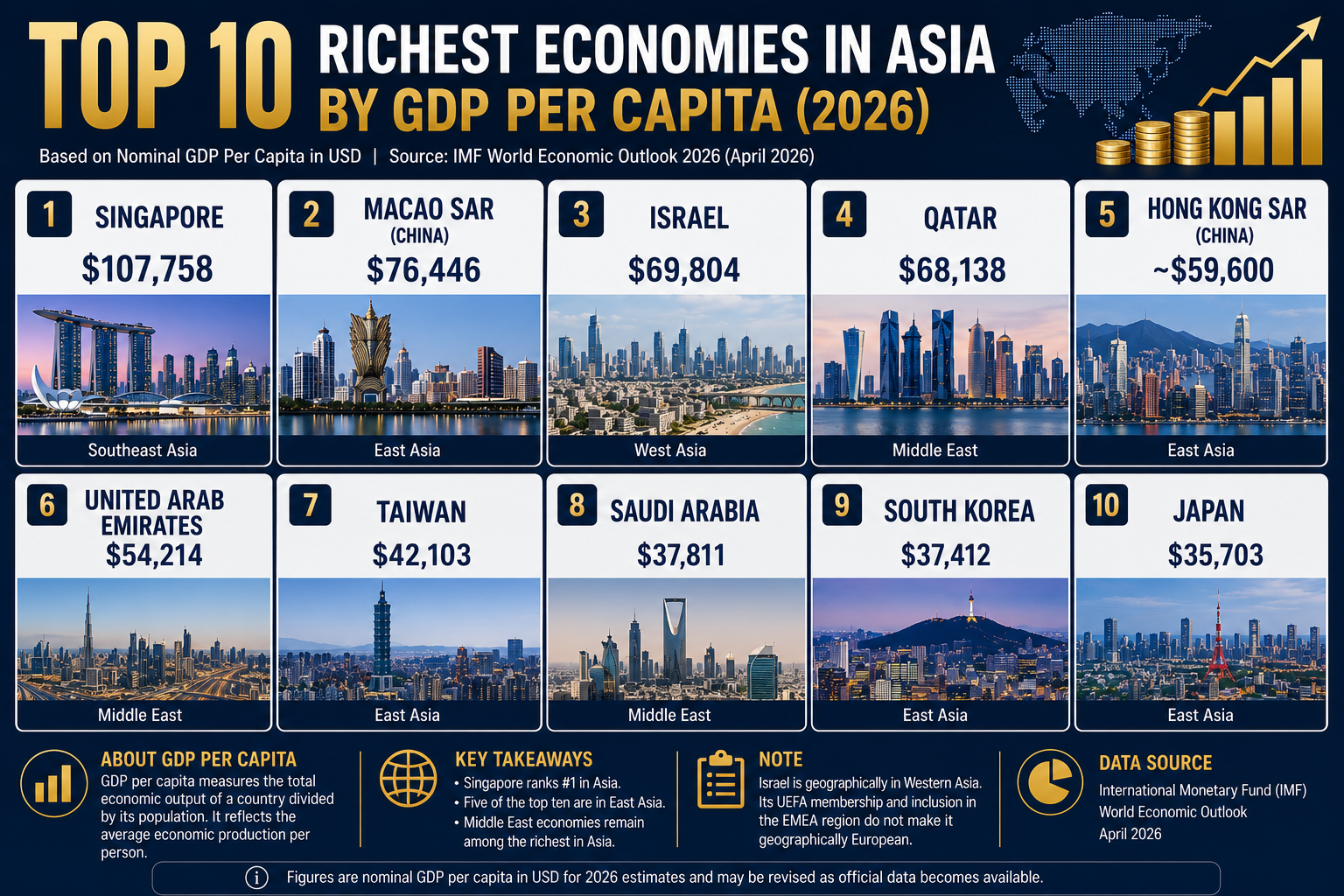
Top 10 Richest Asian Economies by GDP Per Capita (2026)
| Rank | Economy | GDP per Capita (USD) | Region |
|---|---|---|---|
| 🥇 1 | Singapore | $107,758 | Southeast Asia |
| 🥈 2 | Macao SAR (China) | $76,446 | East Asia |
| 🥉 3 | Israel | $69,804 | West Asia |
| 4 | Qatar | $68,138 | Middle East |
| 5 | Hong Kong SAR (China) | ~$59,600 | East Asia |
| 6 | United Arab Emirates | $54,214 | Middle East |
| 7 | Taiwan | $42,103 | East Asia |
| 8 | Saudi Arabia | $37,811 | Middle East |
| 9 | South Korea | $37,412 | East Asia |
| 10 | Japan | $35,703 | East Asia |
Nominal GDP per capita estimates for 2026 based on IMF World Economic Outlook data.
1. Singapore
Singapore continues to lead Asia with the highest GDP per capita. Its strengths in finance, logistics, semiconductors, biotechnology, and global trade have made it one of the world’s wealthiest economies.
Key Industries
- Financial Services
- Semiconductor Manufacturing
- Shipping & Logistics
- Biotechnology
2. Macao SAR (China)
Macao maintains one of the highest GDP per capita figures globally, driven primarily by tourism, hospitality, and the integrated resort industry.
3. Israel
Israel has built one of the world’s strongest innovation-driven economies through technology startups, cybersecurity, artificial intelligence, and medical research.
4. Qatar
Qatar remains one of the richest economies in Asia thanks to its abundant liquefied natural gas (LNG) reserves and energy exports.
5. Hong Kong SAR (China)
Hong Kong continues to serve as one of Asia’s leading international financial centers despite changing global economic conditions.
6. United Arab Emirates
The UAE has diversified beyond oil into finance, tourism, aviation, logistics, and renewable energy, making it one of the region’s most prosperous economies.
7. Taiwan
Taiwan’s globally competitive semiconductor industry, led by companies such as TSMC, has significantly boosted economic productivity and income levels.
8. Saudi Arabia
Economic diversification under Vision 2030, combined with oil exports and large-scale infrastructure investment, continues to strengthen Saudi Arabia’s economy.
9. South Korea
South Korea remains a global leader in electronics, automotive manufacturing, shipbuilding, batteries, and consumer technology.
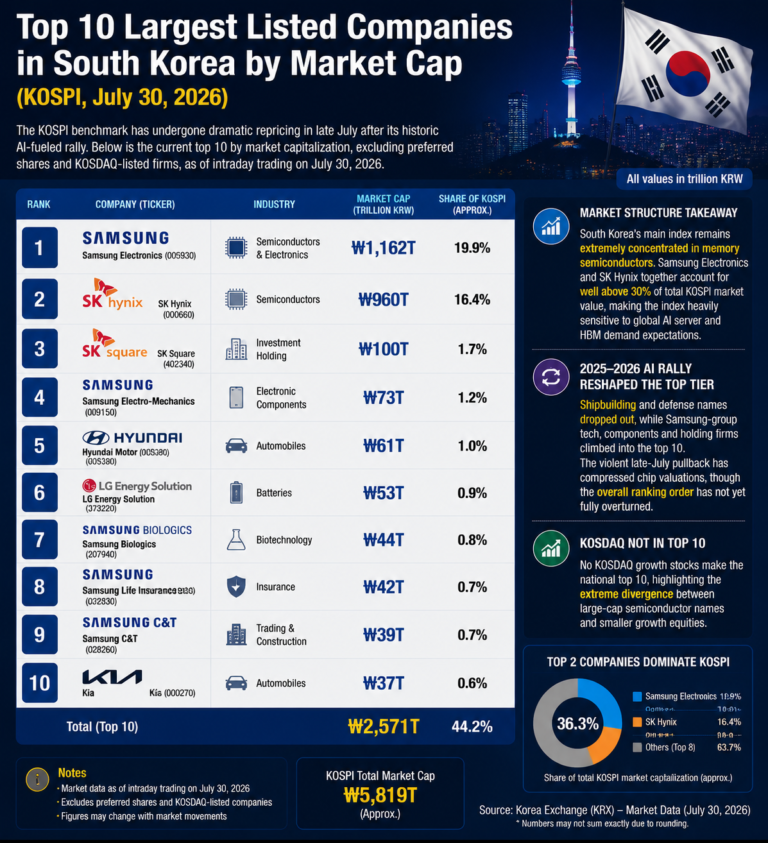
Major companies include Samsung, Hyundai, LG, SK, and Kia.
10. Japan
Despite slow population growth, Japan continues to rank among Asia’s wealthiest economies due to its advanced manufacturing sector, robotics, automotive industry, and high-value exports.
Why GDP Per Capita Matters
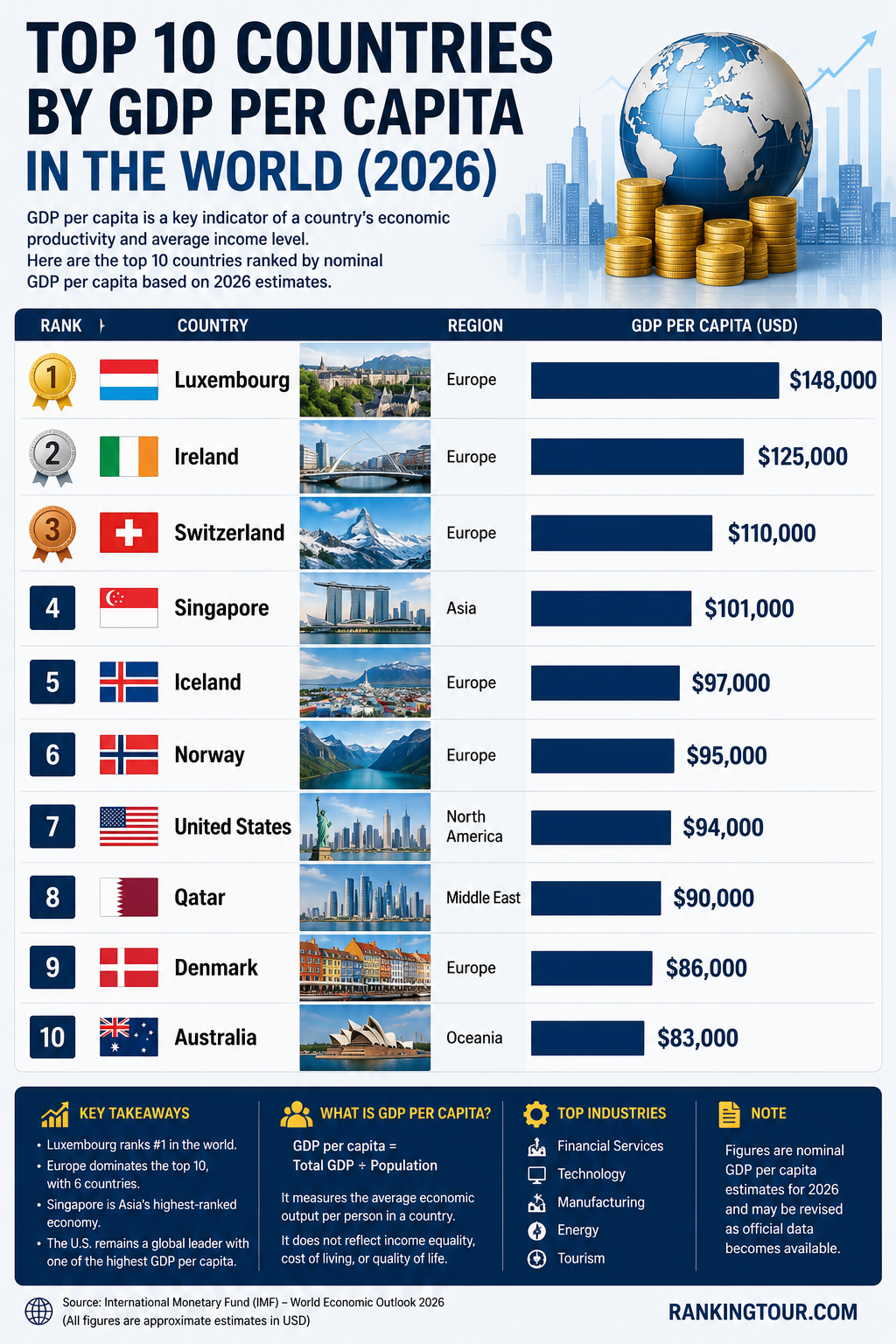
GDP per capita reflects the average economic output generated per person and is widely used to compare income levels and productivity across economies.
However, it should not be interpreted as a direct measure of:
- Individual wealth
- Cost of living
- Income equality
- Quality of life
- Personal happiness
Key Takeaways
- Singapore remains Asia’s richest economy by nominal GDP per capita.
- East Asia accounts for five of the top ten economies.
- The Middle East contributes three economies to the top ten.
- Advanced technology and financial services continue to be the largest drivers of high-income economies.
Conclusion
Asia’s wealthiest economies share several common characteristics: strong institutions, highly productive industries, advanced technology, and global connectivity.
As artificial intelligence, semiconductors, renewable energy, and digital finance continue to expand, these economies are well positioned to maintain their leadership in the coming years.
Source
International Monetary Fund (IMF), World Economic Outlook (April 2026), nominal GDP per capita projections.
About the Author