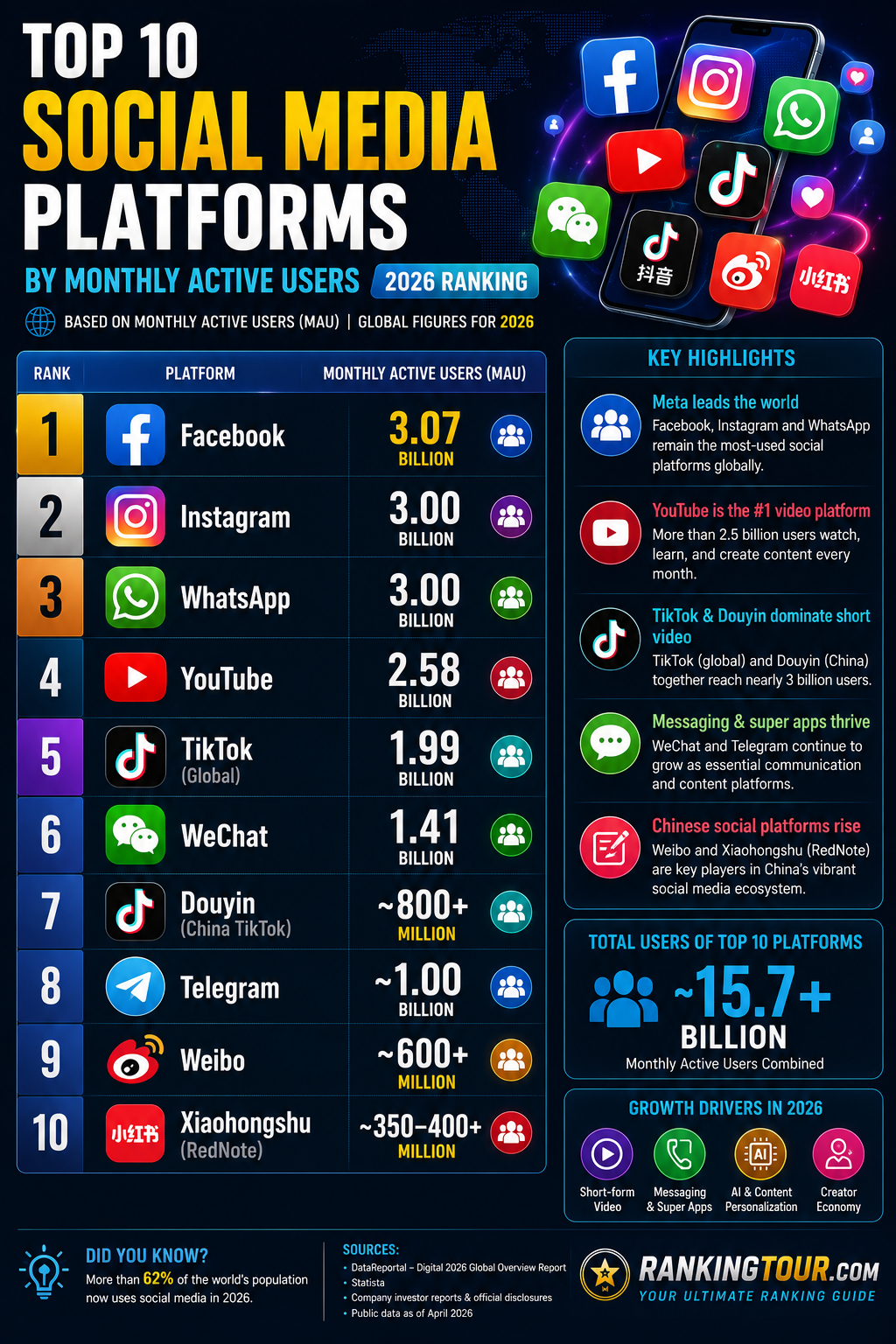
Social media has become an essential part of modern life, connecting billions of people across the globe every day. From messaging and video sharing to content discovery and online communities, social platforms continue to shape how people communicate, consume information, and interact with brands.
Based on the latest available Monthly Active User (MAU) data in 2026, here are the world’s largest social media platforms.
Top 10 Social Media Platforms in 2026
| Rank | Platform | Monthly Active Users |
|---|---|---|
| #1 | 3.07 Billion | |
| #2 | 3.00 Billion | |
| #3 | 3.00 Billion | |
| #4 | YouTube | 2.58 Billion |
| #5 | TikTok | 1.99 Billion |
| #6 | 1.41 Billion | |
| #7 | Douyin | 800+ Million |
| #8 | Telegram | 1.00 Billion |
| #9 | 600+ Million | |
| #10 | Xiaohongshu (RedNote) | 350–400+ Million |
Facebook Remains the World’s Largest Social Platform
With over 3.07 billion monthly active users, Facebook continues to hold the crown as the world’s largest social media platform.
Despite fierce competition from short-form video apps, Facebook maintains its leadership through its massive global network, advertising ecosystem, and integration with Meta’s broader family of platforms.
Instagram and WhatsApp Reach the 3 Billion User Milestone
Both Instagram and WhatsApp have surpassed the remarkable milestone of 3 billion monthly active users.
Instagram continues to dominate visual content and influencer marketing, while WhatsApp has evolved into one of the most important communication tools worldwide, particularly in Asia, Latin America, and Europe.
YouTube Continues to Rule Online Video
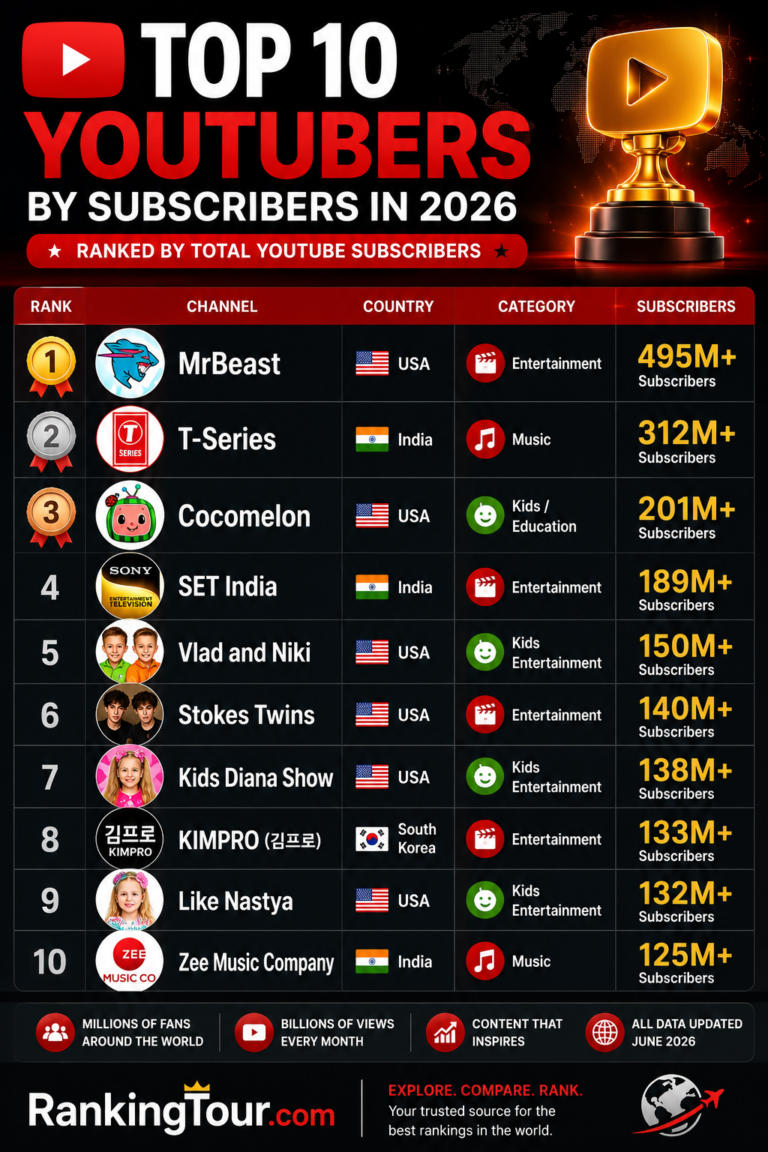
YouTube remains the world’s leading video platform with approximately 2.58 billion monthly users.
From entertainment and education to live streaming and podcasts, YouTube has become one of the most influential digital platforms in history.
TikTok and Douyin Dominate Short-Form Video
TikTok continues its rapid global expansion with nearly 2 billion users worldwide.
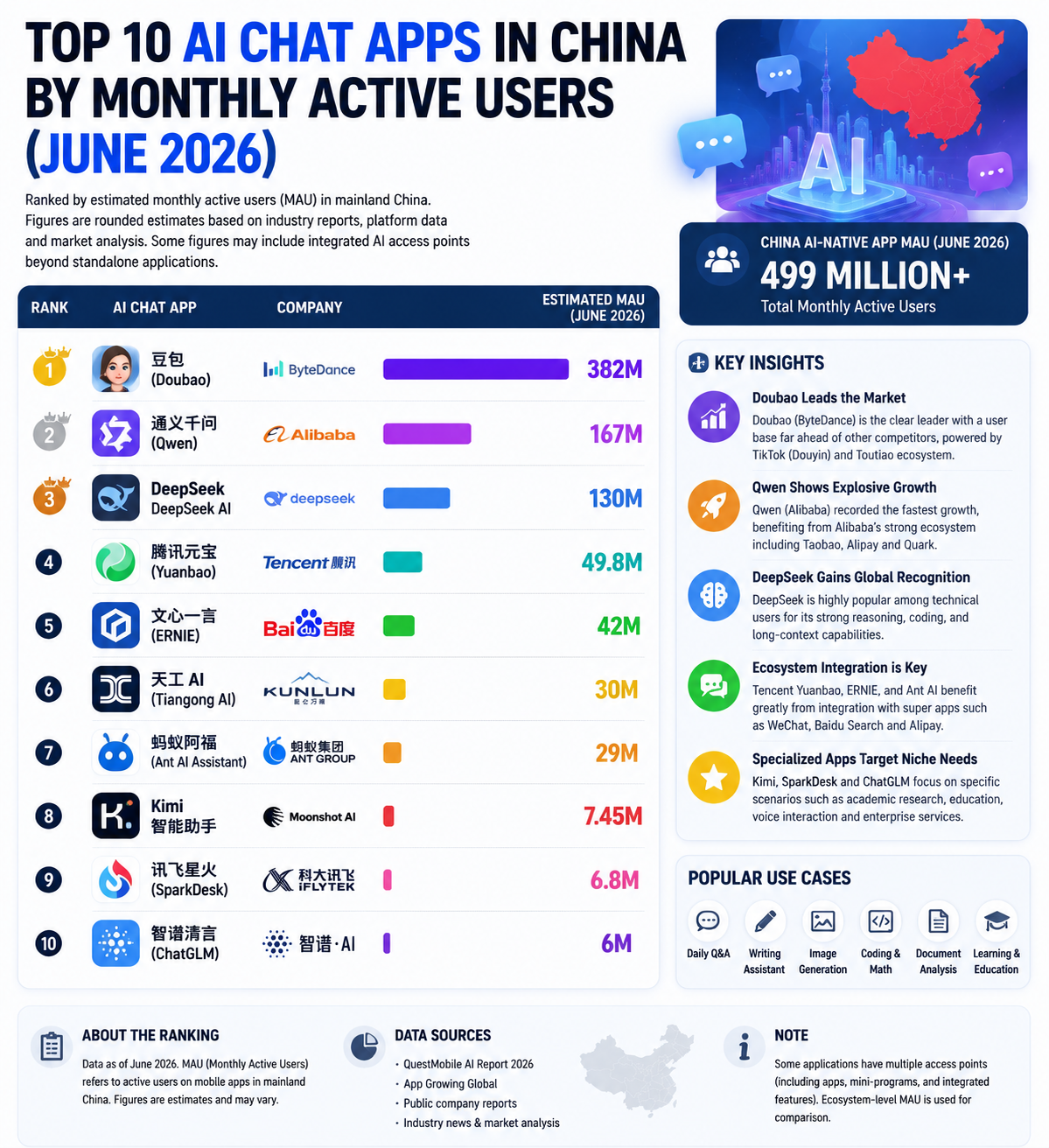
Meanwhile, Douyin—the Chinese version of TikTok—has grown into one of China’s most powerful digital ecosystems, reaching more than 800 million active users.
Together, TikTok and Douyin influence global trends, consumer behavior, e-commerce, and digital entertainment at an unprecedented scale.
WeChat: More Than a Social Platform
WeChat remains China’s largest digital platform with approximately 1.41 billion monthly users.
Unlike traditional social networks, WeChat combines messaging, payments, shopping, content, and mini-programs into a single ecosystem, making it one of the world’s most comprehensive super apps.
The Rise of Chinese Social Platforms
China’s social media ecosystem continues to grow rapidly.
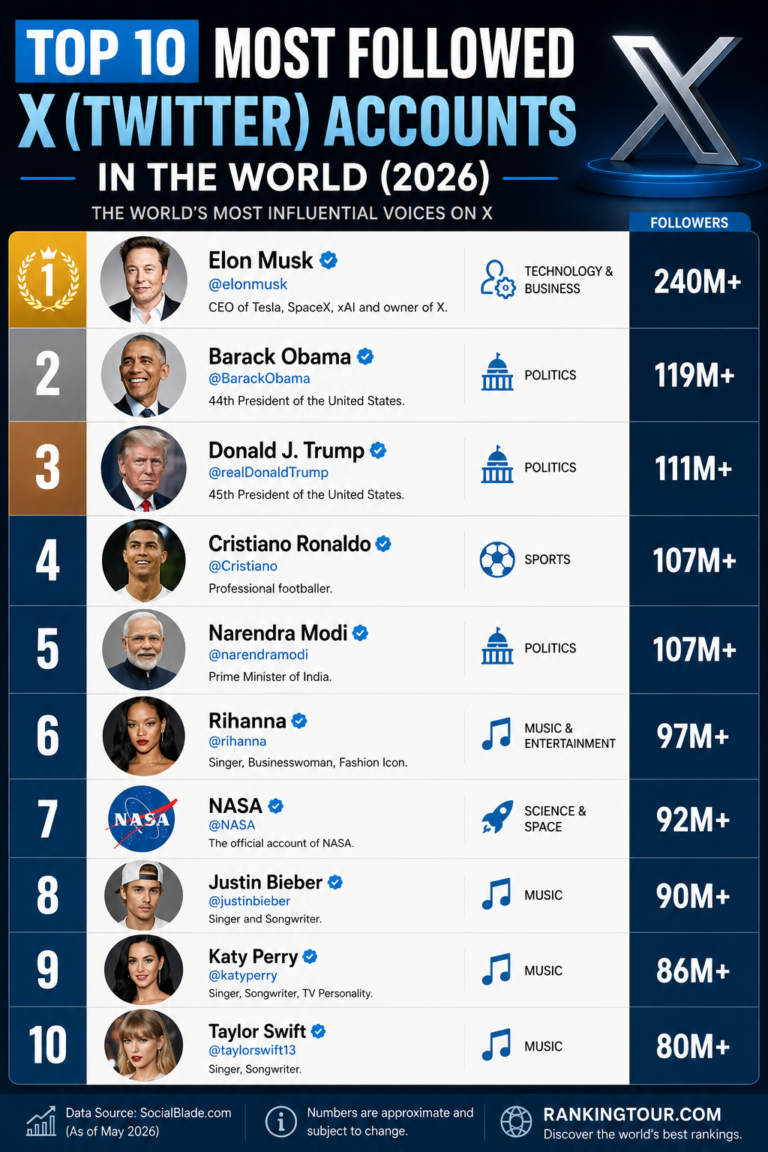
Often described as China’s version of X (formerly Twitter), Weibo remains one of the country’s most influential public discussion platforms with over 600 million users.
Xiaohongshu (RedNote)
Xiaohongshu has become one of the fastest-growing lifestyle and shopping communities in Asia.
With an estimated 350–400 million users, the platform has become a major destination for product discovery, travel inspiration, beauty trends, and consumer reviews.
Key Social Media Trends in 2026
Short-Form Video Leads Engagement
TikTok, Douyin, Instagram Reels, and YouTube Shorts continue to dominate user attention worldwide.
Messaging Platforms Continue Growing
WhatsApp, WeChat, and Telegram remain critical communication tools for billions of users.
AI Changes the User Experience
Artificial intelligence is increasingly powering content recommendations, search functions, chat assistants, and personalized feeds.
Social Commerce Expands
Platforms such as Xiaohongshu, TikTok Shop, and Douyin are transforming social media into powerful e-commerce ecosystems.
Final Thoughts
The 2026 ranking highlights the incredible scale of today’s social media industry.
Meta continues to dominate through Facebook, Instagram, and WhatsApp, while YouTube maintains its position as the world’s leading video platform.
At the same time, TikTok, Douyin, WeChat, Weibo, and Xiaohongshu demonstrate the growing influence of China’s digital ecosystem on the global stage.
As AI, creator economies, and social commerce continue to evolve, the battle for user attention is only becoming more competitive.
Source: DataReportal, Statista, company reports, and industry research (2026).
About the Author