Asia has become one of the world’s fastest-growing centers for higher education, research, and innovation. Universities across China, Singapore, Hong Kong SAR, Japan, and South Korea continue to strengthen their international reputation and academic influence.
According to the latest QS Asia University Rankings 2026, Chinese universities lead the region, while institutions from Hong Kong SAR and Singapore remain among Asia’s most prestigious educational establishments.
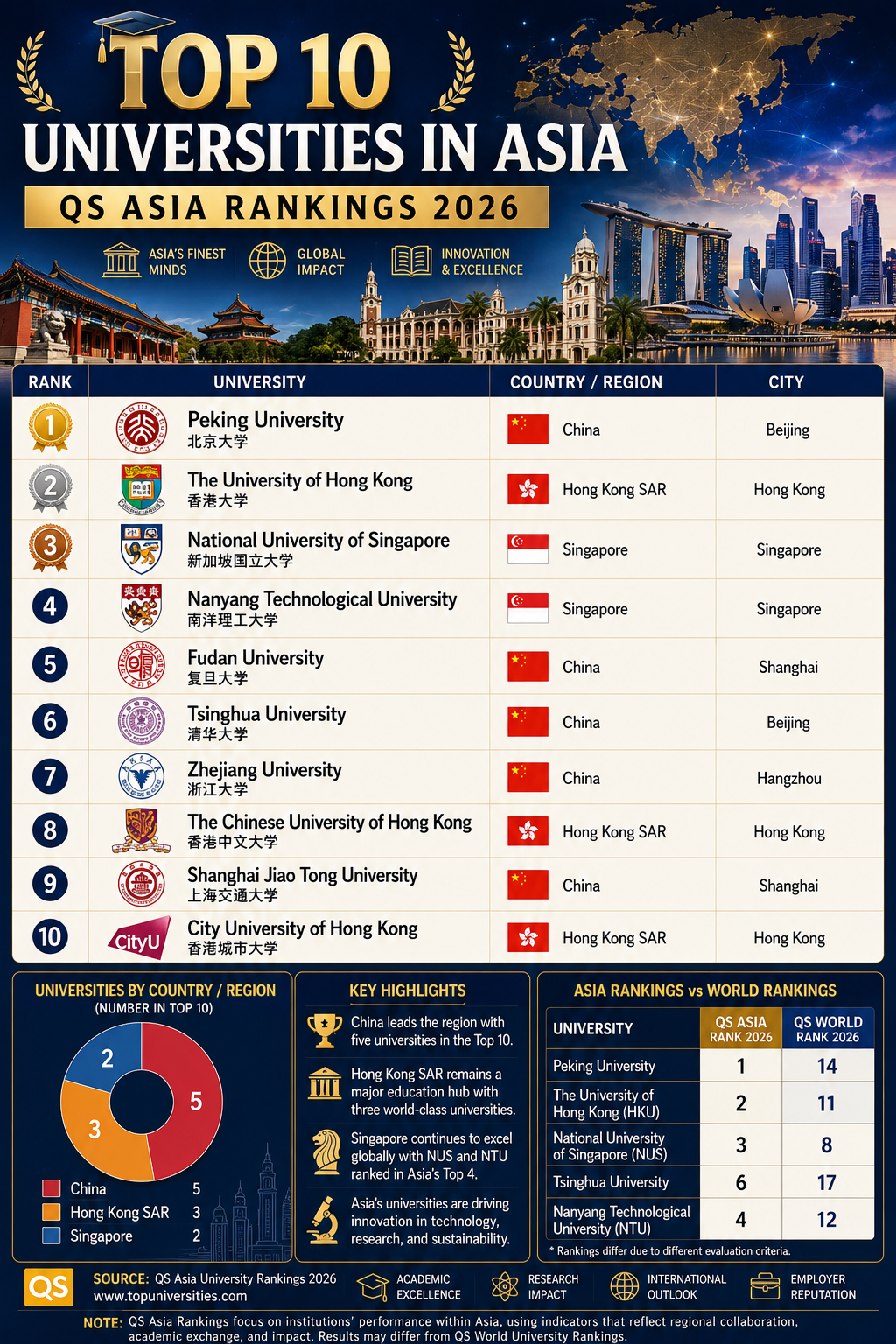
Top 10 Universities in Asia (2026)
| Rank | University | Country/Region |
|---|---|---|
| 🥇 1 | Peking University | China |
| 🥈 2 | The University of Hong Kong (HKU) | Hong Kong SAR |
| 🥉 3 | National University of Singapore (NUS) | Singapore |
| 4 | Nanyang Technological University (NTU) | Singapore |
| 5 | Fudan University | China |
| 6 | Tsinghua University | China |
| 7 | Zhejiang University | China |
| 8 | The Chinese University of Hong Kong (CUHK) | Hong Kong SAR |
| 9 | Shanghai Jiao Tong University | China |
| 10 | City University of Hong Kong | Hong Kong SAR |
Countries/Regions with the Most Universities in the Top 10
| Country/Region | Universities |
| 🇨🇳 China | 5 |
| 🇭🇰 Hong Kong SAR | 3 |
| 🇸🇬 Singapore | 2 |
Key Highlights
China Leads Asian Higher Education
China places five universities in Asia’s Top 10, reinforcing its position as a global leader in research, technology, engineering, and innovation.
Hong Kong SAR Continues to Shine
Hong Kong SAR remains one of Asia’s most important education hubs. HKU, CUHK, and City University of Hong Kong all rank among the continent’s elite institutions.
Singapore’s Global Excellence
Despite its relatively small population, Singapore hosts two of Asia’s highest-ranked universities. Both NUS and NTU consistently rank among the world’s best universities.
Research and Innovation Drive Success
The highest-ranked universities excel in artificial intelligence, engineering, medicine, business, sustainability, and scientific research.
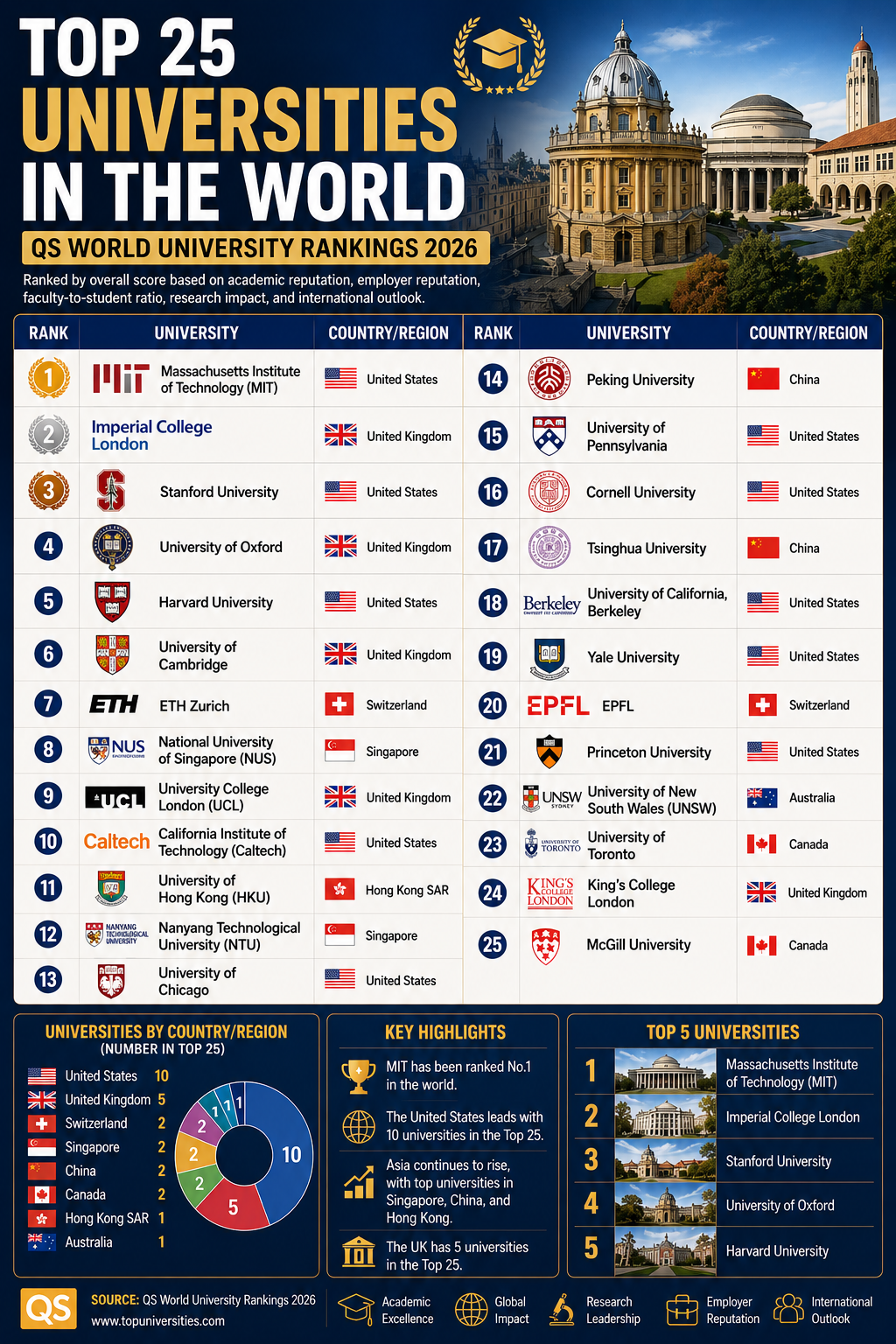
Asia vs Global Rankings
One interesting observation is that regional rankings and global rankings can differ significantly.
For example:
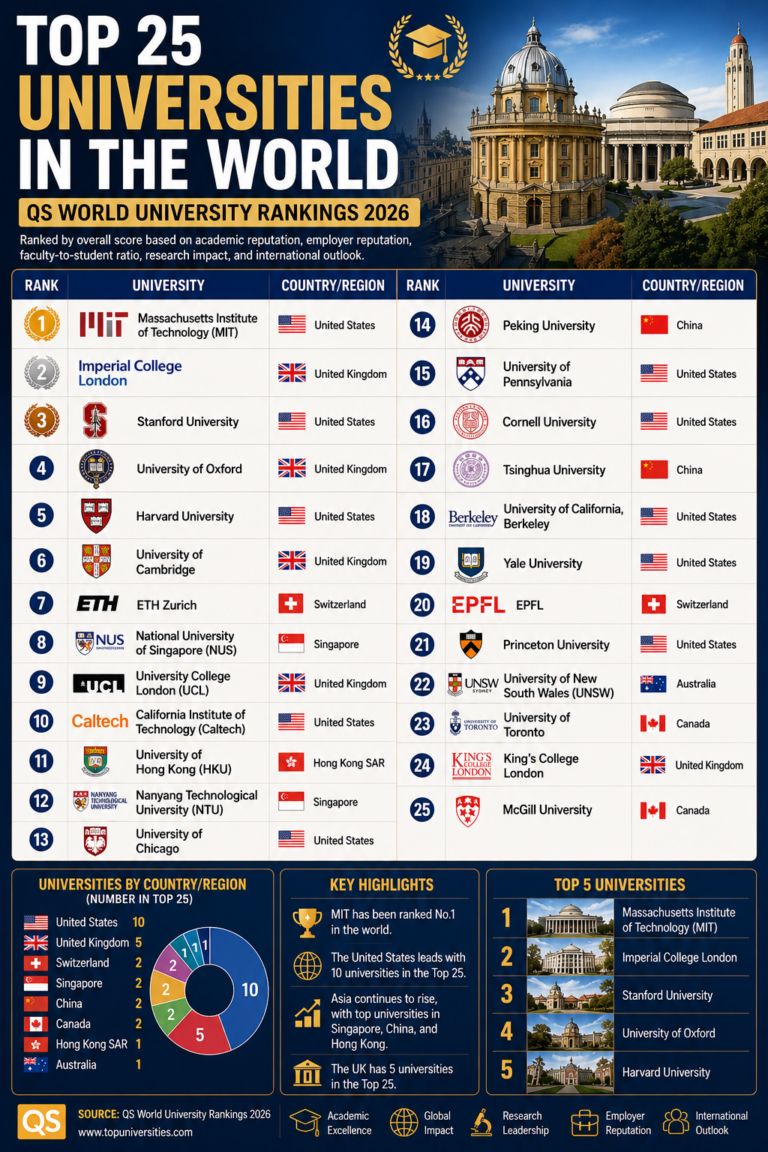
| University | QS Asia Rank | QS World Rank |
| Peking University | #1 | #14 |
| HKU | #2 | #11 |
| NUS | #3 | #8 |
This difference occurs because QS Asia Rankings include additional indicators focused on regional collaboration, academic exchange, and influence within Asia, while QS World Rankings place greater emphasis on global reputation, internationalization, and worldwide research impact.
Why Asian Universities Are Rising
Several factors are contributing to Asia’s rapid rise in higher education:
- Massive investment in research and development
- Growing international student populations
- Strong government support for innovation
- Expanding partnerships with leading global institutions
- Rapid growth in STEM and AI-related programs
As a result, Asian universities are becoming increasingly competitive with elite institutions in North America and Europe.
Conclusion
The QS Asia Rankings 2026 demonstrate the growing strength of Asian higher education. Chinese universities now dominate the regional rankings, while Hong Kong SAR and Singapore continue to serve as world-class education and research centers.
As Asia’s influence in technology, science, and business continues to expand, its leading universities are expected to play an even greater role in shaping the future of global higher education.
Source
QS Asia University Rankings 2026
Note
The QS Asia Rankings and QS World University Rankings use different methodologies. Therefore, a university’s position in Asia may differ from its position in the global rankings.
About the Author